

When you can stay active and strong, you can keep doing what you love. That kind of support is built from the inside out. Strong bones depend on a combination of nutrients, lifestyle habits, and how your body absorbs and uses what you take.
Key Takeaways
- Strong bones depend on key nutrients like calcium, vitamin D3, and vitamin K2.
- Bone needs change over time, especially after midlife.
- The best supplements are about supporting how nutrients are absorbed and used, not just how much of a nutrient is included.
What makes bones strong?
Bones are living tissue that is constantly being renewed through a process called remodeling. During remodeling, your body continuously breaks down and rebuilds bone tissue. To do this, it relies on a steady supply of nutrients, including building blocks for bone structure plus the nutrients that help your body to use those building blocks.
Calcium is an essential building block for maintaining bone strength. In fact, nearly all of the calcium in your body is stored in your bones and teeth, where it helps provide structure and support. Strong bones depend on other nutrients too, as well as movement and other daily habits that work together over time.
Key nutrients for Bone Strength
Bone support is never about just one nutrient. There are actually several nutrients that play different roles in bone strength support. Some help build bone structure, while others help your body absorb, direct, or utilize nutrients effectively.
| Nutrient | What it does | Why it matters |
|---|---|---|
| Calcium | Builds bone structure |
Core mineral for bone density |
| Vitamin D3 | Supports calcium absorption | Helps the body use calcium effectively |
| Vitamin K2 | Helps direct calcium to bones | Helps keep calcium where it belongs |
| Magnesium | Supports bone formation | Often under-consumed in modern diets |
| Creatine | Supports muscle strength | Helps to support bone over time |
How to use calcium supplements effectively
Many people don’t get enough calcium from diet alone. Most adults need roughly 1,000–1,200 mg per day from food and supplements combined, depending on their age and life stage.
Calcium supplements can help fill nutritional gaps when dietary intake falls short. Why is that so important? When daily calcium intake isn't consistent, the body may draw on these stores to support other functions. Over time, that can affect bone strength.
Supplements can be especially useful for people who don't regularly consume calcium-rich foods or who are looking for additional nutritional support as their needs change with age.
Calcium forms: what’s the difference?
Not all calcium supplements are the same. The form of calcium can influence how much calcium is delivered per serving and how it’s experienced in the body.
Calcium carbonate: concentrated and widely used
Calcium carbonate is one of the most common forms of calcium found in supplements. Because it provides a relatively high amount of calcium per serving, it can be an efficient option for people looking to increase their calcium intake. It is typically taken with food, since stomach acid helps support absorption.
The sources of calcium carbonate can vary. Some carbonate supplements come from mined minerals, while others come from plant-based sources such as marine algae.
Calcium citrate: more soluble
Calcium citrate is calcium bound to citric acid. Unlike calcium carbonate, it is less dependent on stomach acid and can generally be taken with or without food.
Because calcium citrate contains less calcium per serving than calcium carbonate, larger servings may be needed to provide the same amount of calcium. For some people, however, the flexibility and ease of use make it an appealing option.
Other forms of calcium
Other forms of calcium include calcium hydroxyapatite, calcium lactate, and calcium gluconate. These forms differ in concentration and in how they are used in supplements.
While each form has unique characteristics, they are generally less common in everyday bone support supplements than calcium carbonate or calcium citrate.
Why vitamin D3 and K2 matter together
In addition to calcium, there are a couple of important nutrients that help your body use the calcium properly. Vitamin D3 helps your body absorb calcium from the foods and supplements you take. Vitamin K2 helps direct that calcium into your bones (and not your arteries).
- Vitamin D3 helps calcium enter the bloodstream.
- Vitamin K2 helps guide calcium into bones.
Together, these vitamins support how calcium is both absorbed and used in the body. This connection is one reason why carefully designed bone supplements include D3 and K2, rather than relying on calcium alone.
Think of calcium as the building material, vitamin D3 as helping your body access it, and vitamin K2 as helping it get where it needs to go.
Life stages and bone health needs
Bone remodeling continues throughout life. Over time, the balance between building and breaking down bone tissue shifts, making consistent nutrition increasingly important.
Early adulthood
In adolescence and early adulthood, the body builds bone mass faster than it breaks down. Bone mass typically peaks in early adulthood, making these years an important opportunity to establish strong bones through strong nutritional habits. Adequate nutrition during this time helps set the foundation for later years.
After peaking, bone loss typically begins in one’s 30s.
Pregnancy & postpartum
Pregnancy and breastfeeding place unique demands on the body, including changes in how calcium is used and stored. During this time, calcium in the mother’s bones helps support the growing baby, and temporary decreases in bone density can occur. This is normal.
For most women, bone density is typically restored after pregnancy and weaning. Maintaining consistent nutrition remains important throughout pregnancy, postpartum, and breastfeeding.
Midlife
This stage is one of the most important windows for supporting long-term bone health.
Bone needs begin to shift in midlife, especially during perimenopause and menopause. Hormonal changes can accelerate bone loss, making nutrient intake and daily support especially important during this stage.
For women and men, lifestyle factors like stress, activity levels, and diet also play a role in how well bone is maintained.
Older adulthood
Bone health becomes increasingly important with age. After midlife transitions, the focus shifts to maintaining bone strength over time.
Bone loss can continue gradually, so consistent nutrient intake, movement, and ongoing support become key.
Men also experience gradual bone loss as they age. While it often happens more slowly, maintaining adequate nutrient intake remains an important part of long-term health.
What to look for in a bone strength supplement
When choosing supplements, it helps to look beyond just numbers on the label. The goal isn't simply to consume more calcium. You want to choose a formula that supports how that calcium is absorbed and used in the body.
Ask these questions when considering a bone strength supplement:
- Does it provide calcium, the foundational mineral for bone health?
- Does it also include supporting nutrients like vitamins D3 and K2?
- Are the ingredients in forms your body can absorb and use?
- Does the serving fit naturally into your daily routine?
- Are the ingredients thoughtfully sourced and selected?
A closer look: Bone Strength Take Care
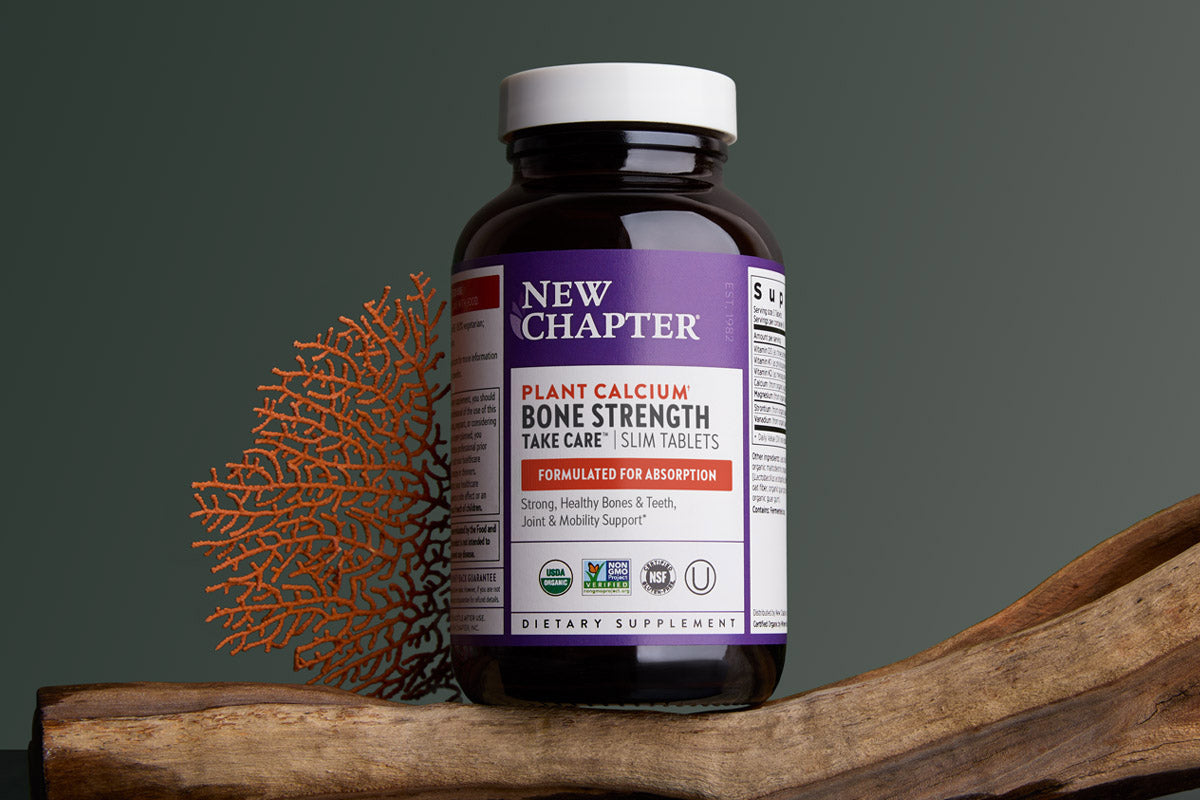
Bone Strength Take Care™ is formulated with multiple nutrients designed to support how the body uses calcium. New Chapter is now the #1 natural calcium brand.†
| Nutrient | Source | Why it's included |
|---|---|---|
| Plant calcium | Red marine algae |
Provides calcium carbonate (high in elemental calcium) |
| Vitamin D3 | Pine trees | Supports calcium absorption in digestive system |
| Vitamin K2 | MK-7 form | Helps guide calcium to bones rather than arteries |
| Magnesium & trace minerals | Red marine algae | Additional bone-supportive nutrients |
†Leading natural calcium brand in FDMC based on total Nielsen dollar sales in the latest 52 weeks through 5/23/2026.
Other bone-supportive nutrients
While calcium is foundational, it isn't the only nutrient involved in bone health. Depending on your individual needs, other bone health supplements may help round out your routine.
D3 and K2 support
Depending on your needs, you may choose a comprehensive bone health formula that includes calcium alongside these nutrients, or a dedicated D3 and K2 supplement.
- 1,000 IU vitamin D3
- 45 mcg vitamin K2
- 905 mg calcium
- 5,000 IU vitamin D3
- 90 mcg vitamin K2
- No calcium
Magnesium support
Magnesium plays an important role in bone health and is involved in bone formation and mineral balance. Because many adults fall short of recommended magnesium intake, magnesium supplementation can be a helpful addition to a bone-supportive wellness routine. Explore our magnesium family of products, all made with well-absorbed magnesium bisglycinate.
Creatine support
Creatine is best known for supporting lean muscle mass and strength, but it also has a role in supporting healthy aging, including bone health. For those looking to support muscle mass, strength, and bone health as part of an active lifestyle, creatine can be a valuable addition to their routine.
Check out our Creatine Complex Calcium & Magnesium powder, made with creatine plus calcium and magnesium to support strength from multiple angles.
Are bone supplements enough on their own?
Supplements can play an important role in bone health, but they’re just one part of the picture. Since your body is constantly rebuilding and adapting, you can support the process every day.
Nutrition: supporting your body day to day
What you eat consistently helps support bone strength over time. Calcium, protein, and a range of nutrients from your diet all work together in the body, creating the foundation that supplements can build upon.
Calcium-rich foods include:
- Dairy foods such as milk, yogurt, and cheese
- Calcium-fortified foods and beverages
- Certain leafy greens, including collard greens and kale
- Fish with edible bones, such as sardines and canned salmon
Supplements can help fill gaps, but they work best alongside a steady, nourishing routine. Food provides more than individual nutrients, and a balanced eating pattern helps support the broader nutritional foundation that bones rely on.
Movement: keeping your bones engaged
One of the remarkable things about bone is that it responds to use. Regular movement helps signal the body to maintain and strengthen bone tissue over time.
Weight-bearing and resistance-based activities are especially important because they support both muscle and bone. Staying active can help maintain strength, stability, and mobility throughout life.
Bone-supportive activities may include:
- Walking and hiking
- Dancing or pickleball
- Strength and resistance training
- Balance training (such as walking lunges or walking backward)
Checkups: staying in tune with your body
Bone health isn't usually something you see or feel day to day. That's why regular healthcare visits can be an important part of your long-term strategy.
A conversation with your healthcare provider can help you understand your personal risk factors, evaluate whether supplements may be appropriate, and determine whether additional screening makes sense for your stage of life. As your needs change over time, check-ins about nutrition, movement, and bone health can help ensure your approach evolves with you.
Bone density scans, often called DXA or DEXA scans, may be recommended based on age, menopause status, family history, or other risk factors. These scans measure bone density and can help identify changes before symptoms appear.
Stay strong for life
Bone strength depends on more than one nutrient. It comes down to how key nutrients like calcium, vitamin D3, and K2 work together in the body.
The most effective approach is one that supports both nutrient intake and how those nutrients are used by the body. Whether you're focused on building strong habits early, navigating midlife changes, or healthy aging, a thoughtfully designed bone health routine can help lay the groundwork for lifelong strength. Build your New foundation today.