

If nutrition experts summarized a favorite health tip, it might be: “Please eat more fiber.” Fiber is pretty fabulous for your health. It helps you feel full after eating, feeds the good bacteria in your digestive system, helps improve gut health including colon health, helps with comfortable pooping, and it’s been linked to lower cholesterol and balanced blood sugar levels. Tragically, most Americans consume nowhere near enough fiber every day. It’s a pretty easy problem to solve—eat more fiber-rich foods. Plus, fiber supplements can help you max out your daily fiber intake.
Key Takeaways:
- Organic fiber supplements support digestion and gut microbiome.
- Choosing the right fiber depends on your health goals and tolerance.
- Top options include organic inulin capsules and prebiotic fiber gummies.
How Do I Choose the Best Fiber Supplement for My Digestive Health?
Dietary fiber is a type of carbohydrate. You can check labels on foods and supplements to see how much fiber is in each serving. Fiber is one of those “the more the merrier” nutrients in terms of consuming different types. It’s great to eat a wide variety of fiber types, including both soluble and insoluble fiber.
Soluble vs. Insoluble Fiber – What’s the Difference?
Soluble fiber dissolves in water. Some soluble fibers form a thick gel in the digestive system, these include oats and psyllium. These gel-forming fibers have been studied for their effects on blood sugar and cholesterol levels. Some soluble fiber is considered “prebiotic” fiber because it ferments in the digestive tract and feeds your natural microorganisms. Inulin is a classic prebiotic fiber.
Insoluble fiber doesn’t dissolve or get digested. Instead, it sweeps through the digestive system intact and can help to add bulk to stool and promote regularity. Insoluble fiber is found in whole grain products, leafy greens, and fruit with edible skins (think apples and pears).
Why Organic, Whole-Food Derived Fiber Sources Matter
New Chapter fiber supplements are crafted with organically grown fiber sources. That’s because we believe that organic agricultural methods matter. For all of our supplements, we prioritize ingredients that are whole food, organic, and non-GMO, and that goes for our fiber sources:
- Organic Jerusalem artichoke inulin from China
- Organic blue agave inulin from Mexico
- Organic psyllium husk from India
- Organic fermented prunes from California, USA
- Organic baobab from Africa
- Organic acacia from Africa
How to Evaluate a Fiber Supplement
Here are 3 things to look for when checking out fiber supplements:
- Check for third-party validations. For example, these might include Non-GMO Project verification and organic certification.
- Check the form. Is it a gummy? A capsule? A wafer? Pick something you think you’ll be able to take regularly.
- Review the claims and ingredients. What benefits are you looking for? What is the amount of daily fiber provided?
Are There Any Side Effects to Taking Large Amounts of Fiber?
If you’re interested in adding supplementary fiber to your wellness routine, you’re going to want to ease into it. Talk to your healthcare provider if you have questions about fiber supplements or your general fiber intake.
Common Side Effects
Overdoing it with fiber can, well, clog things up. Fiber is a highly beneficial nutrient, but having too much, too soon can cause digestive discomfort, bloating, and gas.
How to Avoid Overconsumption
Consuming more fiber should be about achieving healthy balance rather than trying to hit a high number. When it comes to supplements, you could work your way up to the suggested serving size rather than starting with the full amount right away. For example, you could take just one capsule a day for a week, then add another. (Avoid going over the suggested serving size.)
What Are the Top Recommended Fiber Supplements for Women?
This may seem obvious, but women’s digestive systems are not identical to men’s.
Why Women Have Unique Digestive Needs
According to the American College of Gastroenterology, women have slower emptying in the large intestine and tend to experience more constipation than men, particularly with age. In addition, a recent study found that peri-menopause and menopause appear to cause changes in women’s gut function. 94% of study participants reported experiencing digestive health symptoms at this time of life, such as bloating and constipation.
Key Ingredients to Look For
If you’re experiencing digestive changes related to menopause or anything else, check in with your healthcare provider. In general, fiber supplements can support anyone’s digestive health, including whole-food derived formulas that feature inulin (from blue agave or from Jerusalem artichoke) or psyllium husk.
New Chapter’s Top Fiber Supplements
New Chapter’s gut-healthy fiber formulas are made with meticulous care, delivering high-quality ingredients intentionally crafted for effective microbiome and gut support.*
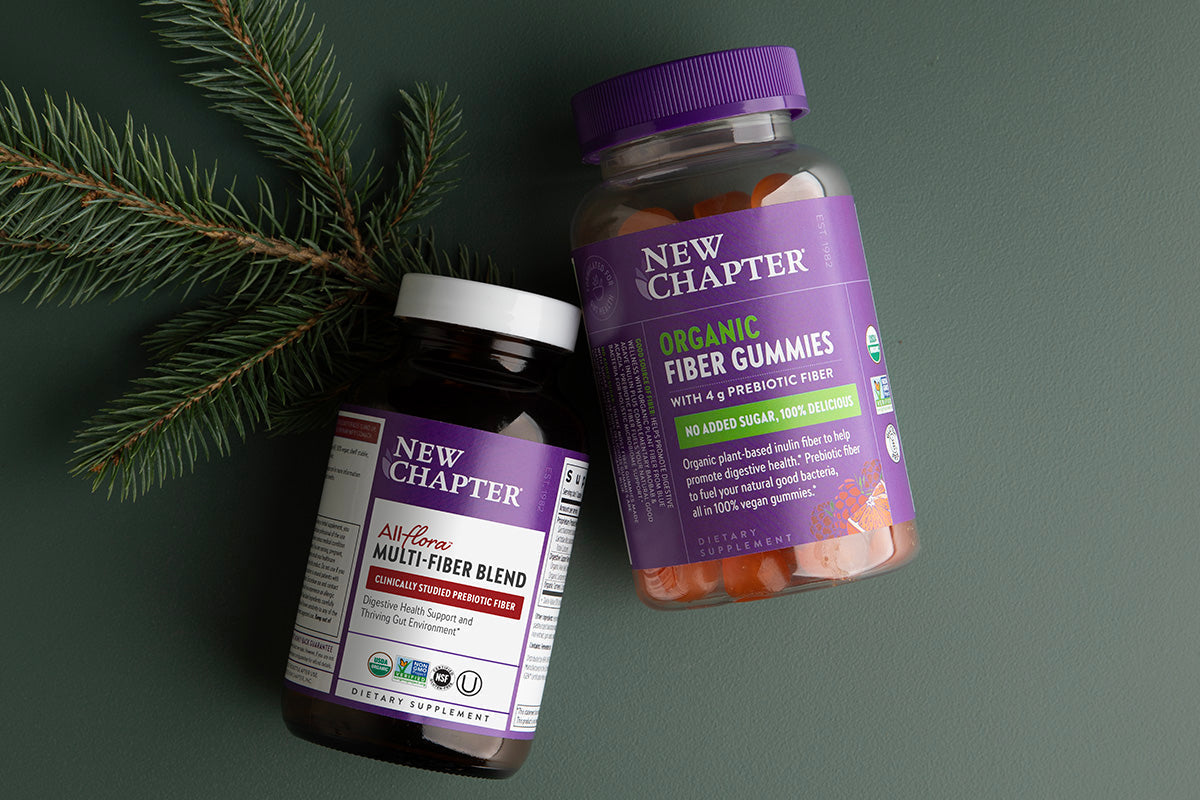
Organic Fiber Gummies with Prebiotic Fiber from Organic Blue Agave Inulin
Meet your daily fiber needs with 100% delicious citrus-berry flavored fiber gummies made with certified organic blue agave inulin fiber. These 2-per-day plant-based gummies provide 4 grams of prebiotic fiber with NO added sugar. Crafted to promote digestive health* and includes complementary baobab and acacia fiber. Ideal for those who prefer a tasty, convenient option for daily fiber supplementation.
All-Flora™ Multi-Fiber Capsules with Organic Inulin + Psyllium Husk
Experience this expertly formulated fiber combo with 5 grams of organic, plant-based fiber per 10-capsule serving. Our fiber blend features certified organic inulin from Jerusalem artichoke plus fiber from organic psyllium husk and organic fermented prune. Clinically studied prebiotic fiber provides nourishment to fuel your natural gut bacteria.* Crafted with complementary traditional botanicals such as organic ginger, peppermint, marshmallow root, and aloe. Perfect for those seeking fiber in capsule form (no chewing, no mixing).
How to Incorporate Fiber Supplements into Your Daily Routine
Adding fiber to your daily routine takes just seconds. Here are 3 easy steps to make your fiber journey fantastic.
1. Timing and Serving Size Tips
Go slow! If you’re adding fiber gummies or capsules to your routine, you can start with just one a day for a week or so. Then slowly work your way up to a full serving of two gummies or 10 capsules, if desired.
2. Get Fiber from Foods, Too
Build your plate with plenty of fruits, vegetables, whole grains, and legumes to boost your daily fiber intake with a variety of everyday foods.
3. Pair Fiber with Hydration
Drinks lots of water to help all that fabulous fiber do its thing in your gastrointestinal tract.
Bottom Line
Choosing the right fiber supplement is really about finding what makes your gut feel supported and your routine feel easy. Options made from ingredients like organic inulin, psyllium, and fermented fruit can deliver gentle, effective support for digestion and the microbiome. Remember, the best results come from pairing your supplement with good daily habits, like staying hydrated and eating fiber‑rich foods. With a few thoughtful choices, you’ll be feeling new again with happier, more comfortable gut health every day.