

If your body feels different in your 40s and 50s, you're not imagining it.
Many women notice changes during midlife. Sleep may become less predictable. Stress may feel different. Recovery can take longer than it used to. Some changes are easier to see and feel than others.
Bone health is a little different. Changes in bone density happen quietly over time, often without symptoms. That's why your 40s and 50s can be such an important opportunity to start paying attention to the habits and nutrients that support your body's long-term strength and resilience.
The good news? There are meaningful ways to support your bones at every stage of the journey.
Key Takeaways
- Bone loss can begin before menopause and often accelerates during the menopause transition.
- Estrogen plays an important role in maintaining bone density.
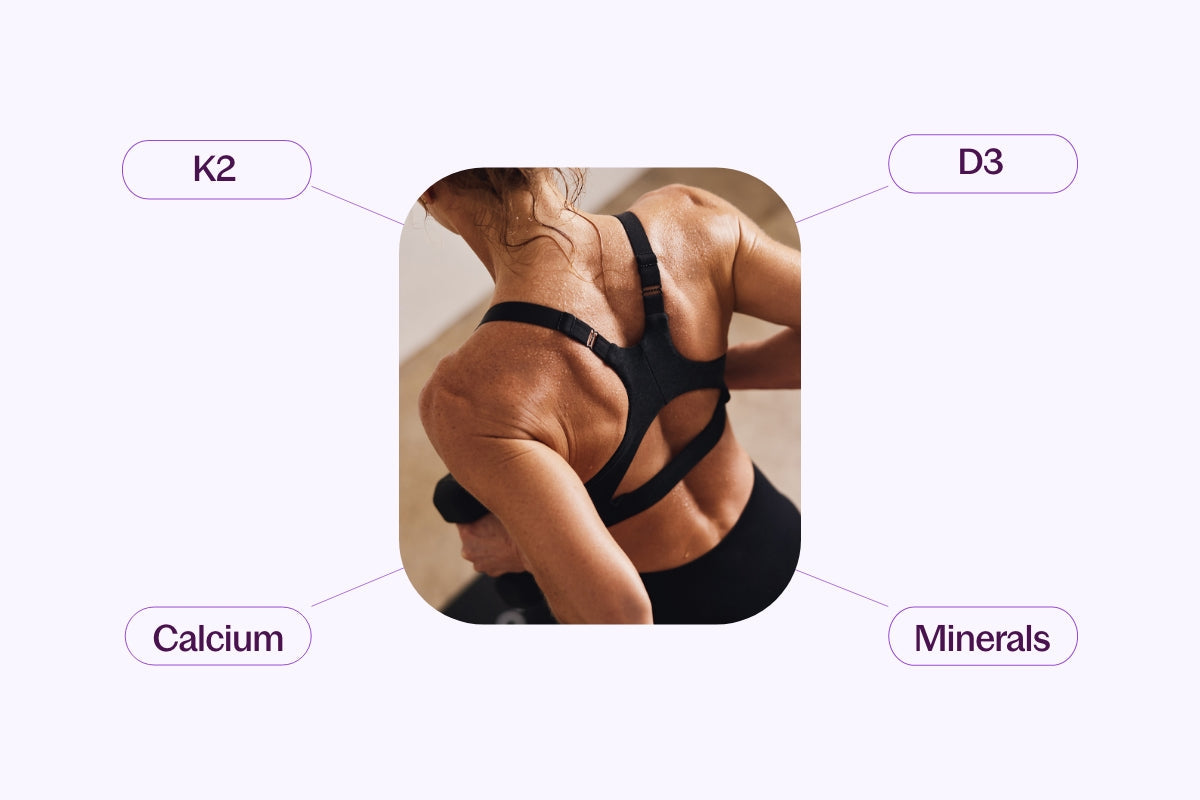
- Calcium, vitamin D3, and vitamin K2 help support healthy bones.
- Exercise, nutrition, and regular checkups are all part of a long-term bone health plan.
Why bone health becomes more important after 40
Your bones are constantly renewing themselves. Throughout life, your body breaks down old bone tissue and builds new bone in its place.
When you're younger, that rebuilding process generally keeps pace with bone loss. As you move through your 30s and beyond, some of the factors that support strong bones begin to change. Peak bone mass is typically reached in early adulthood, after which bone rebuilding gradually slows.
This doesn't mean your bones suddenly become weak at 40. It simply means that maintaining bone strength becomes increasingly important over time.
For many women, the conversation around bone health becomes especially relevant during perimenopause and menopause, when hormonal changes can influence how quickly bone is broken down and rebuilt.
The estrogen connection
One of the many changes that happens during perimenopause and menopause is a shift in estrogen levels.
Estrogen plays an important role in maintaining bone density. As estrogen levels begin to decline, bone loss can speed up, making bone health a bigger focus during midlife. Research shows that menopause significantly accelerates bone loss and increases the risk of osteoporosis over time.
This is one reason many women begin paying closer attention to bone health in their 40s and 50s.
The most important thing to know is that bone loss is not something that suddenly appears at age 65. The habits that support strong bones are built over time, which makes midlife an important opportunity to invest in what's ahead.
What nutrients help support bone health?
Strong bones depend on more than one nutrient. If you're building a bone health routine, calcium is often where the conversation starts. But nutrients like vitamin D3 and vitamin K2 help support how your body absorbs and uses that calcium. That's why these vitamins are often included together in comprehensive bone-support formulas.
Calcium: The foundation
Calcium is the primary mineral found in bone. If your diet doesn't consistently provide enough calcium, your body may draw on calcium stored in bones to support other important functions. Over time, this can contribute to weaker bones.
That's why adequate calcium intake remains important throughout life, especially during and after midlife.
Vitamin D3: helping your body absorb calcium
Vitamin D3 helps your body absorb calcium and use it effectively. Even if you're getting enough calcium, your body needs adequate vitamin D3 to help put it to work.
Vitamin K2: helping direct calcium to bones
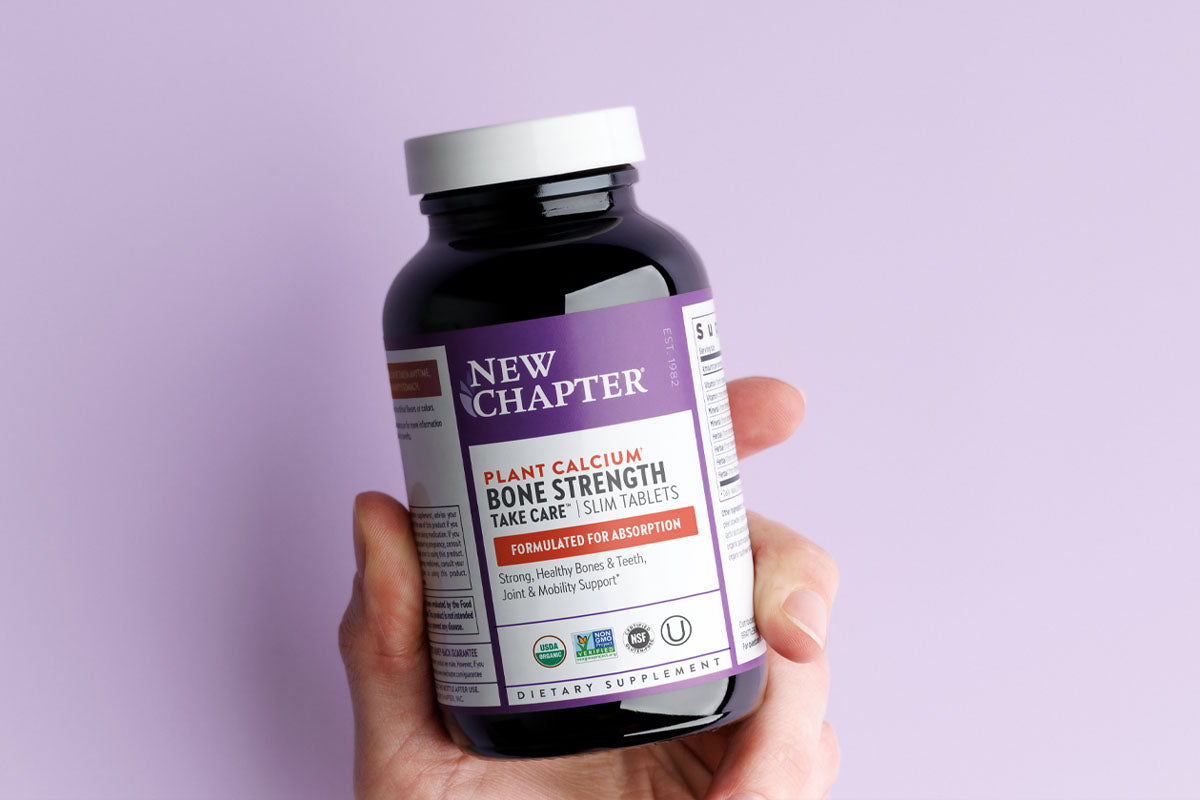
Vitamin K2 helps guide calcium into bones, making it a valuable partner to both calcium and vitamin D3. That's one reason that the best bone-health formulas include all three nutrients together. Case in point: Bone Strength Take Care from New Chapter delivers plant calcium alongside vitamins D3 and K2 for proper absorption.
Building a strong nutritional foundation
Bone health doesn't happen in isolation. Magnesium, protein, and a nutrient-rich diet all play roles in supporting your body's ongoing bone remodeling process.
Women looking for everyday nutritional support may also benefit from a comprehensive multivitamin such as Every Woman's One Daily Multivitamin 40+, which is designed to support women's health through midlife.
Daily habits that support strong bones
Supplements can play an important role in bone health, but they're only one piece of the picture.
Stay active
One of the remarkable things about bone is that it responds to movement.
Regular movement is one of the most important lifestyle habits for supporting long-term bone health. Weight-bearing activities and strength training help stimulate bones while also supporting muscle strength, balance, and stability.
Some bone-supportive activities include:
- Walking
- Hiking
- Dancing
- Strength Training
- Tennis and Other Racquet Sports
Eat for your bones
Food remains the foundation of bone health.
Calcium-rich foods include:
- Yogurt
- Milk
- Cheese
- Fortified Plant Milks
- Sardines and Canned Salmon
- Kale and Collard Greens
These foods can help support consistent calcium intake as part of a balanced diet.
Know your family history
If osteoporosis runs in your family, it's worth discussing with your healthcare provider. Family history is one of several factors that may influence osteoporosis risk and can help inform decisions about screening and prevention.
Building your bone health plan after 40
Whether you're 42 and thinking ahead because osteoporosis runs in your family, or 55 and wondering how to maintain the active lifestyle you love, the same principle applies: the best time to support bone health is now.
A simple bone health plan may include:
- Adequate calcium intake through both food and supplements
- Regular weight-bearing exercise
- Conversations with your healthcare provider about your risk factors
For women looking for targeted support, Bone Strength Take Care combines plant-based calcium from red marine algae with vitamin D3, vitamin K2, and naturally occurring trace minerals in one comprehensive formula.
The bottom line
Your bones are part of the structure that carries you through life.
Supporting them isn't about waiting until something feels wrong. It's about helping your body stay strong, capable, and resilient for the years ahead.
Small daily choices matter. The nutrients you consume, the movement you prioritize, and the habits you build today can all help support your bone health tomorrow.
To learn more about calcium, vitamin D3, and vitamin K2, explore our Complete Guide to Bone Strength Supplements.