

If creatine has been on your radar lately, you’re not alone. More people are taking a closer look at how creatine supplements can support strength, energy, and long-term wellness. For many, especially women entering midlife, that interest is part of learning how to work with the body as it changes over time.
Key Takeaways:
- Creatine is a naturally occurring compound that helps your body produce quick, usable energy at the cellular level.
- Supplementing with creatine can help build lean muscle when paired with resistance training.
- Creatine monohydrate is the most studied and widely recommended form.
- Most people benefit from 3–5 grams daily—no loading phase required.
- Choosing a high-quality, third-party tested supplement matters for reliability and effectiveness.
What is creatine?
Creatine is a compound your body already makes and uses every day. It’s built from three amino acids: arginine, glycine, and methionine. Creatine is produced in the liver, kidneys, and pancreas before being transported to tissues that need quick energy.
About 95% of the body’s creatine is stored in muscle, where it plays its most immediate role. Inside muscle cells, creatine is converted into a form called phosphocreatine. This acts as a quick energy reserve your body can tap into during short bursts of effort.
You also get creatine from food, primarily from red meat and seafood, but in relatively small amounts—typically about 1–2 grams per day. That’s enough to maintain your baseline, but not always enough to fully build up your stores.
Long story short, your body is already working with creatine. Supplementation simply helps you build on that foundation in a way your body recognizes.
What does creatine do in the body?
Creatine works to support your body’s natural energy production in a few key, connected ways.
Supports fast, cellular energy
At its core, creatine helps your body regenerate ATP (adenosine triphosphate). ATP is the primary form of energy that your cells use to power movement. When you lift, push, sprint, or move with intensity, ATP is used quickly. Creatine helps restore it just as quickly, so your body can continue producing energy during short bursts of effort.
Basically, creatine helps your body access energy a little faster. This makes it easier to power through short bursts of activity.
Supports performance you can feel over time
Creatine tends to have its most noticeable effects when it’s paired with resistance training or high-intensity movement. That’s because it supports the kind of quick, repeat efforts these workouts rely on.
With more readily available cellular energy, many people find they can:
- Train with more consistency
- Complete more repetitions or sets
- Maintain effort across a workout
Over time, that added capacity helps support how your body builds strength and adapts to training.
Supports brain and bone health
While creatine is best known for physical performance, it also plays a role in supporting other areas of the body. Research suggests it supports brain function, helps support bone and muscle health, and plays a role in how the body adapts to physical demands over time.
Benefits of creatine supplements
Creatine is one of the most well-researched supplements for supporting strength and performance, especially when paired with resistance training. Its benefits are rooted in how it supports your cells’ ability to produce and use energy, making strength training more effective over time.*
Consistent use has been shown to support both upper and lower body strength, along with gains in lean muscle mass. As training becomes more effective and repeatable, these changes can build over time—supporting overall body strength.*
Creatine also plays an important role in supporting bone health. Alongside resistance training, it can help support bone mineral density, which becomes especially relevant as the body changes with age.*
In summary, supplementing with creatine can help with:
- Increasing lean muscle mass*
- Making strength training more effective*
- Supporting upper and lower body strength*
- Supporting bone mineral density*
- Supporting healthy brain function*
- Supporting cellular energy production*
Who should consider creatine?
Creatine has moved well beyond the weight room. Today, it supports a wide range of people looking to stay strong, energized, and consistent in their routines. Creatine is especially relevant for women and older adults, as natural creatine stores and muscle mass can shift over time. In fact, muscle mass starts to decline naturally after 40, and strength diminishes even faster: around 3% per year. Supporting your body with creatine can help you maintain strength, stability, and confidence in how you move.
You might consider creatine if you are:
- Training for strength or performance
- Looking to support muscle, bone, and overall strength over time
- Navigating changes in strength or recovery, including for women in their 40s and beyond
- Following a plant-based diet with limited dietary creatine
- Focused on long-term mobility, resilience, and healthy aging
How to choose the best creatine supplement
Not all creatine supplements are created equal. But choosing well can be straightforward when you know what to look for.
Types of creatine supplements
Creatine monohydrate is the most widely used and studied form, and is generally considered the gold standard in creatine supplements. Other forms exist, but they haven’t shown consistent advantages in research.
Common types of creatine supplements include:
- Creatine monohydrate: Creatine bound to a single water molecule, forming a stable and well-studied compound used in most research
- Creatine hydrochloride: Creatine bound to an acidic compound that increases its solubility in water
- Buffered creatine: Creatine combined with alkaline compounds to help stabilize pH during processing
- Creatine ethyl ester and other variants: Creatine molecules modified by attaching different chemical groups, such as esters or salts
Prioritize quality and transparency
A high-quality supplement should:
- Be validated by independent third parties
- Clearly list all ingredients
- Highlight evidence-backed benefits you can understand and trust
These markers help ensure you’re getting exactly what’s on the label.
Look for supplements with a clear purpose
Some creatine products keep things simple with just one ingredient. Others take a more comprehensive approach, pairing creatine with nutrients that support muscle, bone, or recovery.
What matters is that the formula you choose feels thoughtful and clear. Make sure you know what it’s designed to support, and why. Check in with your healthcare provider if you have questions about the right choice for you.
Choose what fits your routine
Powders offer flexibility and easy mixing, while capsules provide convenience. The best option is the one you’ll use consistently.
How to take creatine
Creatine supplements work best when taken consistently, as part of your daily routine.
Daily amount and timing
Most people benefit from:
- Daily amount: 3-5 grams
- Timing: Any time of day
Timing (before vs after exercise) doesn't appear to make a meaningful difference. What matters most is taking it consistently.
Do you need a loading phase?
A loading phase—taking higher amounts for the first 5-7 days—is optional, but not necessary.
- With loading: Saturates muscle stores more quickly
- Without loading: Reaches the same levels over time with steady daily use
Most people see benefits with consistent, daily intake: no loading required.
Hydration and creatine
Creatine draws water into muscle cells as part of how it works, so it’s helpful to stay well hydrated.
- Drink water consistently throughout the day
- Pay attention to hydration around workouts
You don't need to overcompensate, though! Just maintain good, steady hydration as part of your routine.
Is creatine safe?
Creatine is one of the most extensively studied supplements available and is generally considered safe for healthy adults when used as directed. It’s generally advised to speak with your healthcare provider before starting supplementation.
Common creatine myths, explained
Creatine has been around for decades, but a few misconceptions still come up. A review published in the Journal of International Society of Sports Nutrition dispels a number of creatine myths.
It’s not a steroid. Creatine is a naturally occurring compound, not a hormone or performance-enhancing drug.
It doesn’t cause fat gain. Any early weight changes are typically due to water being drawn into muscle cells, not an increase in body fat.
It remains effective when mixed with liquid. Creatine monohydrate is stable enough to mix into water, smoothies, or other beverages as part of your routine. For best results, aim to consume right after mixing.
Creatine in your daily routine
You don’t need to overhaul your routine to make creatine work. In fact, it tends to fit best into something you’re already doing.
You might mix it into water after a workout, add it to a morning smoothie, or take it alongside other supplements you already trust.
It’s less about getting it “perfect,” and more about showing up for your body in small, consistent ways. Over time, those small, steady habits can help you feel stronger, more supported, and more in sync with your body.
Choosing a creatine that works with your body
As creatine becomes more widely used, formulations are evolving to support different needs. Some products focus solely on performance. Others take a more integrated approach, pairing creatine with nutrients that support recovery, muscle, and bone health together.
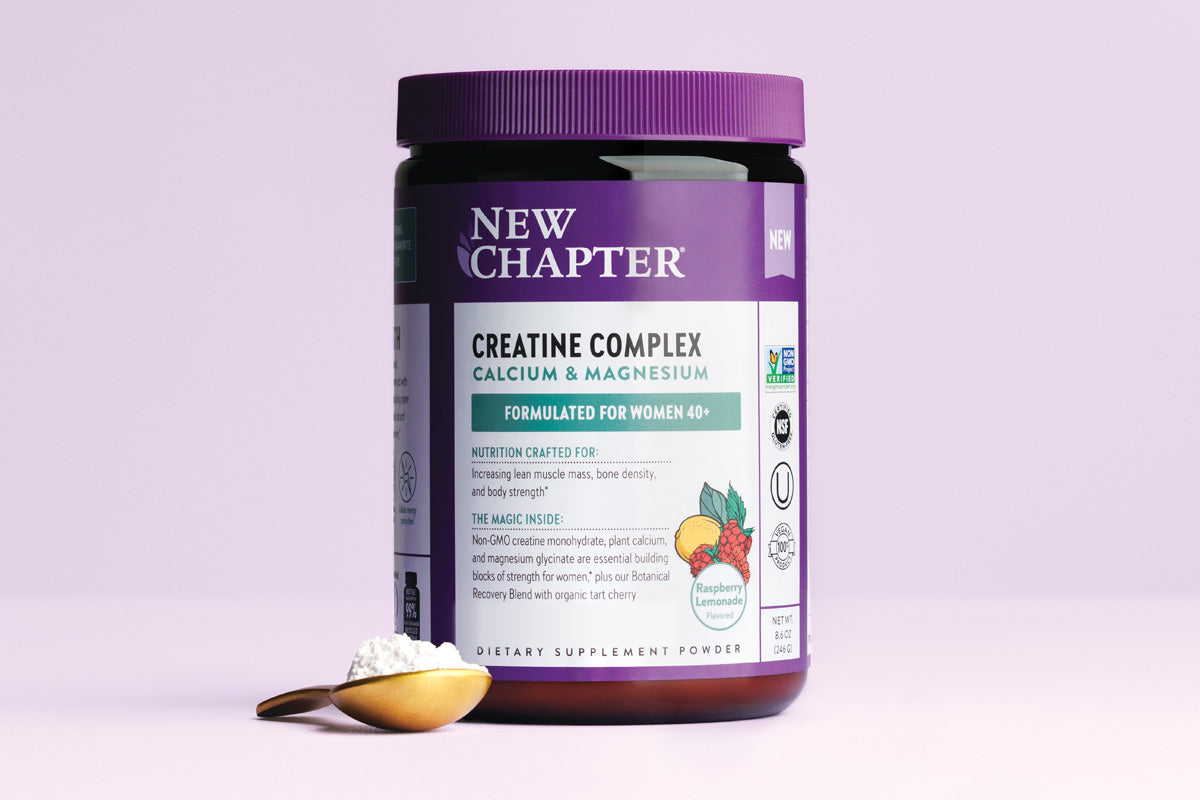
That’s the approach we took with our Creatine Complex Calcium + Magnesium formula. It was thoughtfully developed with women 40+ in mind, bringing together 5 grams of excellent quality creatine monohydrate with plant-based calcium† to support bone health and well-absorbed magnesium glycinate to support muscle recovery.*
It also includes a Botanical Recovery Blend with organic tart cherry and fermented beet root, all in an easy-to-mix, raspberry lemonade–flavored powder designed to fit naturally into your daily routine.
Strength is really about continuing to feel capable in your body, like how you move, recover, and show up day to day. A dedicated creatine-mineral formula can help you do just that.
The bottom line on creatine supplements
Creatine is one of the most well-understood and widely used supplements available today. At its core, it works with your body's natural energy systems to support strength, movement, and resilience over time.
By supporting how your body produces energy, creatine can help you:
- Train with more consistency
- Build lean muscle and whole-body strength
- Feel more supported in movement and recovery
Creatine works best when it is part of your total wellness routine. That might include strength training that challenges your body in the right ways, nourishment that helps you recover, and daily habits that feel realistic and sustainable. It’s about putting the right pieces in place so your body feels supported from multiple angles. Let creatine be part of your New way forward!
†Processed from red marine algae